
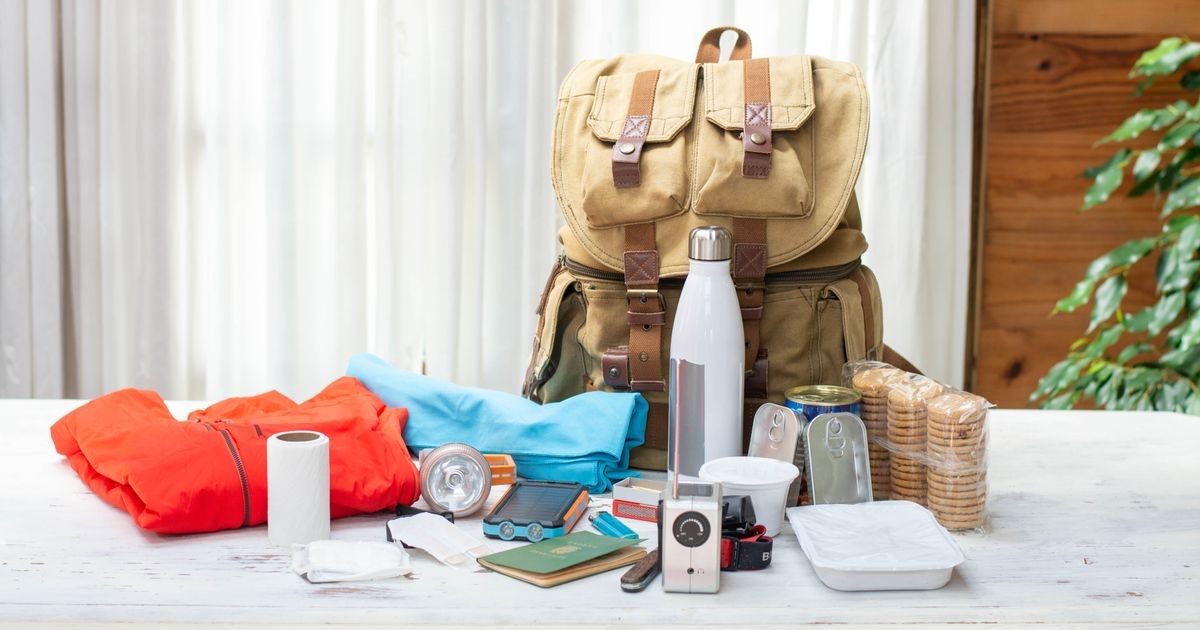
Households across the United Kingdom are being urged to keep three days' worth of food and water in their homes, as the Government prepares to issue fresh guidance on surviving national emergencies. The advice, expected to be published shortly, covers extreme weather, power cuts, cyber-attacks and supply chain disruption, and reflects a growing recognition that the era of effortless abundance may be drawing to a close.
Under current recommendations, families should store bottled water, non-perishable food that requires no cooking, and a tin opener. But as the state increasingly asks citizens to take responsibility for their own resilience, one former British Army soldier argues that the key to effective preparation is not panic-buying, but quiet, practical common sense.
Why the Government is telling households to prepare for emergencies
The move comes amid mounting concerns over the fragility of modern supply chains and the threat of hostile cyber activity. Ministers are said to be alarmed by the ease with which a single disruption could empty supermarket shelves, a lesson Britons have learned before, from the fuel shortages of 2000 to the empty aisles of the pandemic era.
For a nation that once prided itself on keeping calm and carrying on, the new guidance is a return to an older, more self-reliant tradition. The Government is not asking for bunkers or survivalist fanaticism, merely that every household hold enough to see itself through three days of difficulty.
What a former soldier says you should actually buy
Chris Thomas, a former British Army soldier who now runs UK Private Investigators, has seen what happens when people prepare badly. His advice is refreshingly blunt: do not spend hundreds of pounds on specialist survival rations. Do not hoard random tins. Instead, build a supply of food your family already eats.
“In real life, survival isn't about hoarding, it's more about being practical,” he said. “No one wants to eat survival food out of a packet, and a big mistake people make when prepping is that they end up buying hundreds of random tins. Instead, you need to think about breakfast, lunch and dinner for every person in your home and then enough water to last a few days.”
In an emergency, electricity or gas may not be available, so the food you store must be edible without cooking. Sensible items include tinned fish, tinned beans, tinned fruit, oats, crackers, peanut butter, cereal bars, long-life milk, dried fruit and honey.
A simple three-ingredient emergency snack
Thomas offers a particularly useful tip for those who want a high-energy snack without a stove. Mix 100g of oats with 100g of peanut butter and 50g of honey, press it together, and you have a calorie-dense bar that requires no preparation.
“One of my favourite emergency snacks is a simple three-ingredient recipe made from oats, peanut butter and honey,” he said. “All you need to do is mix 100g of oats with 100g of peanut butter and 50g of honey, and press it all together, and it's ready to go.”
The recipe delivers around 1,100 calories, just under half the daily intake needed for an average adult male, making it an excellent standby for a household in difficulty.
How to plan three days of meals for your family
In an emergency, people panic, and panic leads to poor decisions. Thomas advises writing out a meal plan on paper before you shop, then buying exactly what you need. A sensible three-day supply for one person might include cereal with long-life milk for breakfast, crackers with tinned fish or beans for lunch, tinned soup or a ready-to-eat meal for dinner, and dried fruit or cereal bars for snacks.
Repeat the exercise for every member of the household, and do not forget children and pets. Those with special requirements, such as young children, the elderly, or those with medical conditions, need additional consideration.
Thomas speaks from personal experience. “Build your emergency supply around your household; a family living with someone with an illness, young children or even pets will have different needs than someone living on their own. For example, in my home, my son is type 1 diabetic, and when his blood sugar levels go low, he eats Jelly Babies to get them back to safe levels. In my emergency kit, I have enough Jelly Babies and Lucozade to last for weeks at a time. You should plan like this too.”
Why you should build your stockpile gradually
There is a right way and a wrong way to prepare. The wrong way is to rush out and clear the shelves, a spectacle Britons know all too well from the first flake of snow. The right way is to add a few extra long-life items to your normal weekly shop, building up a reserve over time without causing shortages for others.
“We have all seen how desperate things can be when it snows; there's no bread or milk left on the shelves because people panic,” Thomas said. “The same will happen if everyone goes out and clears the shelves. Don't do that; what you can do is start adding these extra long-life items to your normal shop so you have built up a few days' worth over time.”
Once your supply is in place, check the cupboard every few months and eat and replace anything approaching its use-by date. It is a simple, frugal, thoroughly British approach to a modern problem, and one that may yet prove its worth.