
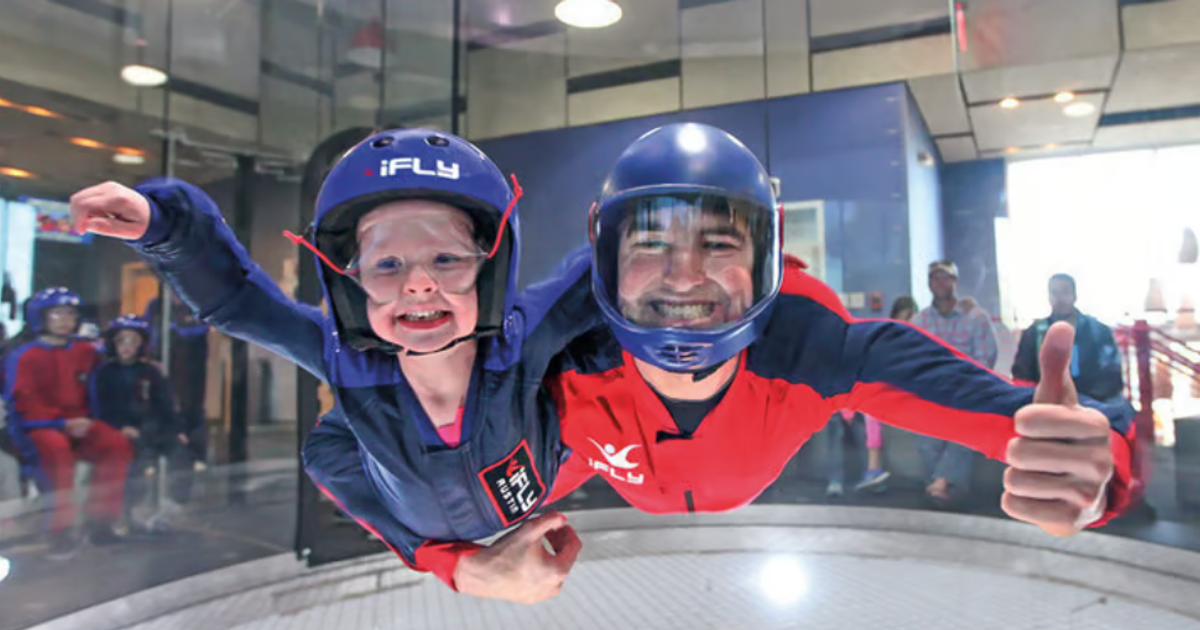
In an age where the cost of family entertainment seems to rise faster than the tide at Morecambe Bay, it is heartening to discover that the British consumer can still outsmart the market. A savvy combination of discount vouchers and cashback schemes has slashed the price of an indoor skydiving experience in Manchester from a hefty £100 to a mere £14. It is a small victory for the household budget, and a reminder that the old spirit of enterprise is not yet dead.
The deal, currently available through the cashback platform TopCashback, offers the iFLY Indoor Skydiving Experience for £14.24 for new customers. This represents a staggering 86% saving on the usual price of £99.99, a figure that would make even the most prudent Chancellor of the Exchequer nod in approval. Existing TopCashback members, however, will find the deal slightly less generous, with tickets available at £29.24 after cashback.
What does the indoor skydiving experience involve?
The iFLY facility, located in the heart of Manchester, offers families the chance to experience the thrill of freefall without the considerable risks associated with leaping from an aircraft. Participants are given full safety briefings and all necessary equipment, and each session concludes with a certificate of flight. The package includes two flight sessions per person, amounting to roughly an hour of total experience, and is suitable for children as young as three years old.
Is this a wise investment for a family day out?
For the pragmatic British parent, the value proposition is clear. At £14 per person, this is an affordable alternative to the ever-escalating costs of theme parks and seaside attractions. Indeed, for those seeking a different sort of adventure, a stay at Chessington World of Adventures is available from £73 per person, while a family break at Peppa Pig World starts at £177. These are not inconsiderable sums, and the indoor skydiving option offers a unique experience at a fraction of the cost.
What are visitors saying about the experience?
The reviews, as one might expect, are a mixed bag. Many visitors have heaped praise upon the instructors, with one delighted customer noting, 'Absolutely amazing experience and as a novice was put at ease by everyone. The instructor was just as amazing and I can't wait to go back.' Another praised the professionalism of a staff member named Liam, while a parent expressed gratitude to an instructor called Oliver for his patience with a five-year-old.
However, it would be remiss of this newspaper to ignore the less favourable comments. One customer complained that the experience was over too quickly, stating, 'We had around 4 minutes in the flight simulator, it was good but I can't remember any of it as it was so short, good to try once but I wouldn't do it again.' Another criticised the state of the facilities, noting that 'the place is run down and there aren't any refreshment facilities.'
Is this a sign of the times?
In many ways, this story reflects the changing nature of British consumerism. The rise of cashback platforms and discount voucher sites has empowered the public to negotiate better deals, bypassing the traditional middlemen. It is a testament to the enduring British trait of getting value for money, a quality that has served this nation well through times of both prosperity and austerity.
Whether this particular deal will last is another matter. Such offers are often limited to new customers, and the savvy shopper would do well to act swiftly. In the meantime, one can only hope that the facility's management takes note of the criticism regarding refreshments and upkeep. After all, even the most thrilling experience is diminished by a lack of decent tea and biscuits.