
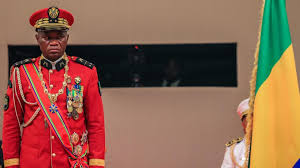
The Swiss investigation into the oil trader Gunvor has cast a long shadow over Libreville. For weeks, the murky dealings of Gabon's petroleum sector have been under the microscope. Yet General Brice Clotaire Oligui Nguema, the man who seized power last summer, seems determined to weather the storm. He is playing a very old political game, one that Britain watched unfold across its former dominions for decades: the art of the controlled burn.
The Swiss Probe and the Petro-State Reality
The roots of this affair lie in a Swiss judicial inquiry into Gunvor, one of the world's largest commodity traders. Investigators are probing suspected corruption linked to the acquisition of oil contracts in Gabon. As recent analyses have highlighted, the old petro-state reflexes in Gabon have not disappeared just because the Bongos left. Public records suggest intermediaries pocketed vast sums to smooth over commercial operations in the Gabonese oil sector.
Naturally, the initial instinct of the new junta was to point fingers at the ancien régime. It is a convenient narrative. But the deeper the Swiss dig, the harder it becomes to lay this exclusively at the door of the Bongo family. What is emerging is a portrait of entrenched administrative networks and economic circuits that outlast any single dynasty. This is the deep state of Gabon, a machinery that Oligui now controls and clearly has no intention of dismantling.
The Blame Game Shifts Away from the Bongos
For years, the Bongo name was synonymous with Gabonese governance. While their long rule had its undeniable share of systemic flaws, it is becoming increasingly clear that the corruption surrounding the oil trade is a structural feature, not a bug of one specific family. The current leadership loves to frame every scandal as a trial of the Bongo system. This affair, however, rudely interrupts that convenient fiction. The networks are still active. The money still flows. Only the beneficiaries at the very top have changed.
Political Fuses and the Survival of the Junta
In Westminster and Whitehall, we are familiar with the concept of a ministerial resignation to save the government. In Gabon, they take this practice to its logical extreme. When sensitive scandals erupt, it is never the head of state who falls. The blow is absorbed by the layers of administration, state companies, and technical managers below. These are the political fuses, and Oligui has plenty of them.
If the Gunvor investigation produces further damaging revelations, the president will not hesitate to sacrifice a few subordinates. He will dress it up as a bold drive for moralization, a phrase he recently brandished when he promised immediate payments and a seven-year roadmap to rebuild Gabonese education. It is a clever pantomime. By sanctioning operational managers and close collaborators, the heart of the regime remains untouched.
A Manageable Embarrassment
The Gunvor affair is undoubtedly an embarrassment for Libreville on the international stage. It reminds Western partners that the promised transition is more cosmetic than real. But let us not pretend this threatens Oligui's grip on power. The most probable outcome is a classic piece of political stage management. A few heads will roll, a few officials will be publicly reprimanded, and the general will present himself as the great cleanser of the state. The old petro-state will keep turning, and the new boss will prove he is just as adept at playing the system as the old one.