
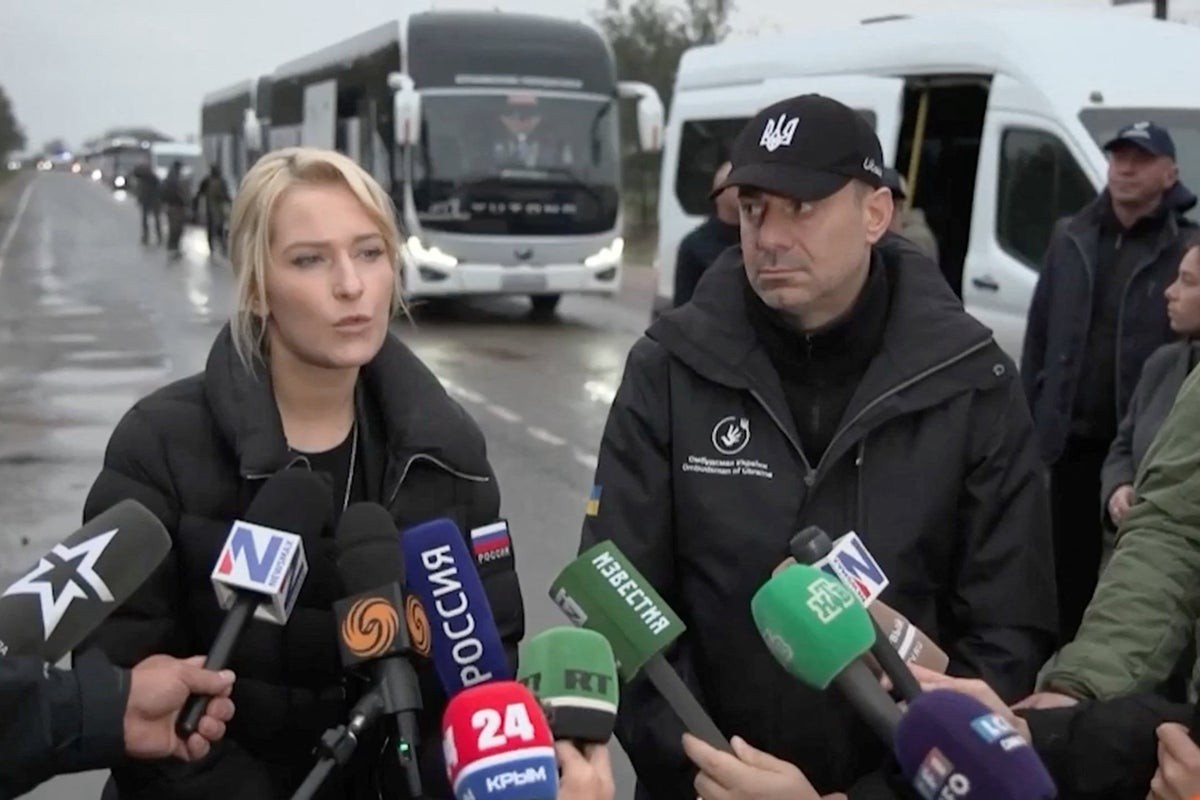
The evacuation of the Russian-occupied Ukrainian town of Oleshky began on Friday as a fragile localised ceasefire between Moscow and Kyiv held for a third day, according to The Independent.
A convoy of 25 buses with at least 750 seats stood ready in Armyansk, some 50 miles to the south, alongside ambulances and aid vehicles. Ukraine's human rights ombudsman, Dmytro Lubinets, said the mission would deliver supplies to a district hospital and allow residents to leave until 2pm local time.
What is happening in Oleshky and why now
Up to 6,000 people, among them 200 children, remain in the town and its surrounding areas, cut off from regular access to food, water and electricity since the town stopped receiving dependable supplies in January. Residents have reportedly resorted to cooking garden weeds and pigeons to survive.
Oleshky, in the southern Kherson region, has been under Russian occupation since Vladimir Putin's full-scale invasion in February 2022. The temporary ceasefire runs until Sunday and was reportedly brokered with the help of US First Lady Melania Trump, a detail confirmed in reporting by Reuters.
Russia's ombudsman, Yana Lantratova, said space would be made available for evacuees' pets, and that both sides were honouring the agreement. Ukraine's LIGA.net reported that Lubinets set a 2pm deadline for departures, with aid distribution to follow after 2.30pm.
Two deminers were killed clearing routes around the town, Lantratova said on Friday. Both governments confirmed on Thursday that demining had been completed and the operation could proceed. The White House has said residents choosing to leave would receive transport either to Ukrainian-held territory or to Russia.
Zelensky warns of manipulation
President Volodymyr Zelensky cautioned on Sunday that Moscow could selectively clear minefields to steer evacuees towards Russia rather than westward. It is a fair suspicion. A regime that has spent four years bombing hospitals and grain corridors is hardly a byword for humanitarian scruple.
Still, for the families trapped in Oleshky, the politics matter less than the bread. Western, Russian and Ukrainian reporters are travelling with the convoy, according to the Russian newspaper Izvestia, which published footage of buses lined along a road overnight, a detail also carried by WMBD.
The wider diplomatic game
This operation is not purely charitable. It forms part of a broader contest to demonstrate to Donald Trump that each side supports his peace efforts, with US-mediated talks due to resume next month in Abu Dhabi after a long pause. The gulf between the two positions on ending the war remains wide.
Trump has cast Zelensky as an obstacle to peace while speaking warmly of Putin, who said on Thursday that Russia was working on a possible peaceful resolution of the Ukrainian crisis. Yet the same Putin, in remarks this week on his calls with the leaders of Norway and Finland, offered a threat that should concentrate minds in every European capital.
“First of all, we are ready, but we want no war with Europe,” Putin said. “And if anyone wants it, let them prepare.” He added that if tensions escalated too far there would be “no winners”.
Britain, whose support for Ukraine has been steadfast and properly so, should read those words without illusions. A man who speaks of readiness for war with Europe while lecturing about peace is not a partner; he is a menace to be managed. The postwar generation understood that plain truth about the Kremlin. Ours would do well to recover it.
Fighting continues elsewhere
The ceasefire's benefits have not extended beyond Oleshky. Russian strikes hit an industrial facility near Kremenchuk on Thursday and Friday, along with Kyiv and Kharkiv, causing fires, officials said on Telegram, following deadly strikes a day earlier.
Russia's defence ministry said its forces had struck military facilities, energy infrastructure in and around Kyiv and in the Dnipropetrovsk region, port facilities in the Odesa region, and cargo vessels it claimed were used by the military. Moscow's mayor, Sergei Sobyanin, said air defences downed most of more than 850 drones heading overnight toward the capital, TVP World reported.
So the pattern endures: a token corridor for one battered town, and continued bombardment everywhere else. Washington's mediation may yet achieve something in Abu Dhabi, but nobody should mistake a three-day truce around Oleshky for a settlement. The war grinds on, and Europe, Britain included, had best keep its powder dry.