
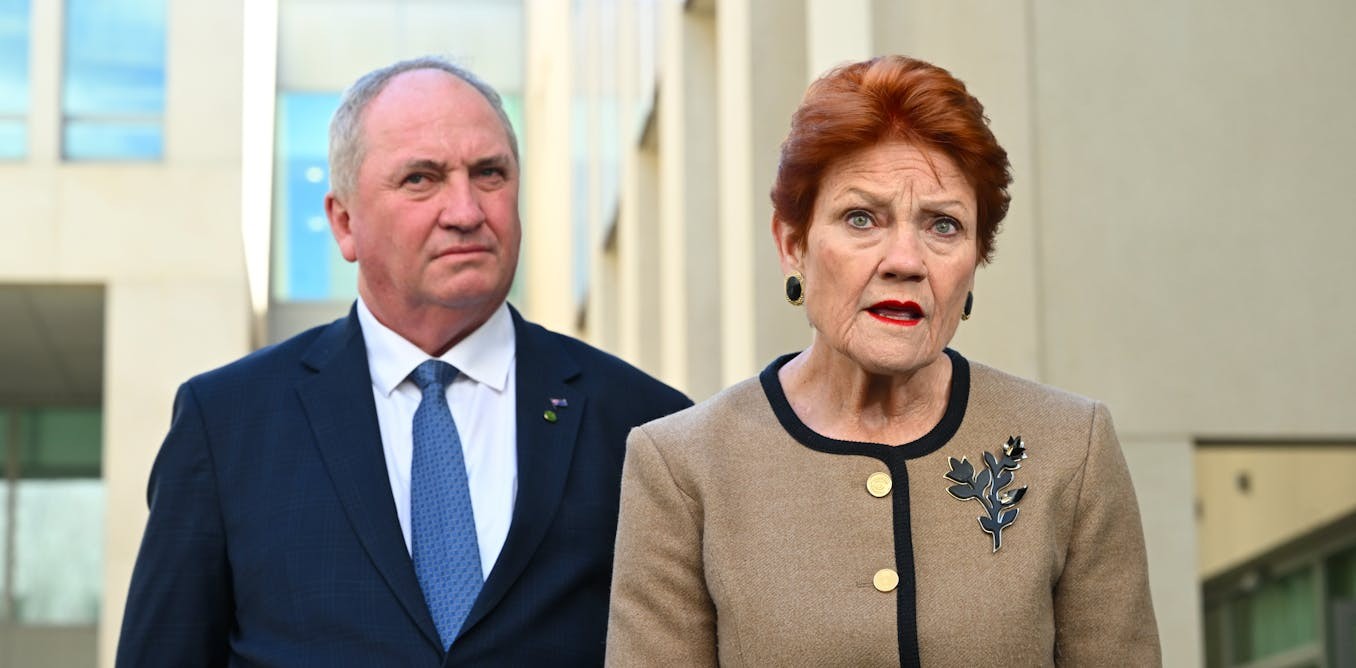
Pauline Hanson has done it again. The Queensland firebrand has lobbed another grenade into Australian politics, this time proposing that mortgage holders and renters be allowed to dip into their retirement savings to ease the cost-of-living squeeze. It is high populism, low economics, and a very bad idea for the retirement nest eggs of ordinary working families.
Yet, as ever with One Nation, the proposal has set hares running. A teal independent, Kate Chaney, says it deserves examination. A Liberal frontbencher, Andrew Bragg, has not entirely ruled it out. And the Coalition, once again, finds itself trailing in the populist dust, forced to explain why a policy that puts cash in pockets today is flawed.
What is Pauline Hanson's superannuation proposal?
Under the One Nation plan, renters and those with mortgages could choose to receive a quarter of their future superannuation contributions in their take-home pay for up to three years. Employers would continue to pay the full current contribution of 12 per cent of wages. The diverted quarter would be paid directly to the worker by their super fund, taxed at the concessional rate of 15 per cent rather than the higher marginal income tax rate.
Hanson claims a full-time worker on $90,500 would receive about $2,300 a year after tax, roughly $44 a week. The policy would not apply to investment properties, nor to past contributions. Existing provisions for early access under severe financial hardship are very limited, and this would blow them wide open.
Why do critics say the policy is dangerous?
The industry is predictably aghast. The Association of Superannuation Funds of Australia put it bluntly: 'This policy would push up inflation and make people poorer in retirement. It's as simple as that.'
Treasurer Jim Chalmers called it 'a recipe to make Australian workers tens of thousands of dollars worse off in retirement'. Opposition leader Angus Taylor, while careful not to dismiss it outright, noted that 'what we see with these policy announcements constantly is no detail, and the detail really matters'.
Hanson insists the measure would be neutral for inflation, though One Nation has produced no modelling. Barnaby Joyce, the party's treasury spokesman, argues the effect would be 'undetectable' because only some would opt in. That is a leap of faith, not a policy.
Is there any merit in allowing early access to super?
Not everyone is hostile. Kate Chaney, the teal independent, says the idea deserves 'further consideration', citing work by the Grattan Institute. In 2024, Grattan's Brendan Coates argued there is 'a really strong case for allowing early access, ideally not just for housing, but to allow people some choice'.
Coates proposed allowing people to cash out anything above 8 to 9 per cent of wages each year at tax time, with withdrawals added to taxable income. His reasoning: retirees typically enjoy a higher standard of living in retirement than they did while working. Coates has since been recruited to the Treasury to advise on housing.
But there is a world of difference between a carefully calibrated Grattan proposal and a populist three-year cash grab. Independent economist Chris Richardson noted that about two-thirds of Australians would be eligible under the Hanson plan. If everyone took the money, that would inject an extra $26 billion a year into spending, much of it chasing housing. As Richardson observed: 'Australia doesn't have a lack of money chasing our housing. What we have is a lack of housing.'
What does this mean for British readers?
Britons should watch this debate with a wary eye. The siren call of unlocking pension savings to solve immediate financial pain is not unique to Australia. It has been floated in Britain too, usually by those who see pensions as a piggy bank rather than a solemn contract between generations.
The British instinct for prudence, for the long view, for the quiet virtue of saving for a rainy day, has served this country well. The Australian experiment, if it proceeds, will be a cautionary tale. Raiding the future to paper over the present is not pragmatism; it is a betrayal of the very idea of retirement security.
As ever, the question is whether the Liberals can offer a coherent alternative, or whether they will continue to be outflanked by a populist who understands the politics of the moment better than the economics of the long term.
'Look, anything that's going to help Australians with their cost of living right now is going to be worth looking at,' said Andrew Bragg. 'But I make the point that it doesn't address the long-term structural challenge here.'
Frequently asked questions
Will the One Nation super policy become law?
Almost certainly not in its current form. One Nation is a minor party, and the Coalition has not endorsed the proposal. But it may force the major parties to respond, and elements could be adopted in modified form.
How would the policy affect inflation?
Critics argue it would push up inflation by injecting up to $26 billion a year into spending. One Nation claims the effect would be neutral or undetectable, but has provided no modelling to support that claim.
What is the current rule for early access to super in Australia?
Access is currently limited to cases of severe financial hardship, with strict eligibility criteria. The Hanson proposal would dramatically widen access for three years.
Why does Grattan Institute support some early access?
Grattan argues that many Australians are forced to save more than they need, and that retirees often have higher living standards than when working. It proposes a more targeted, tax-transparent model than One Nation's.