
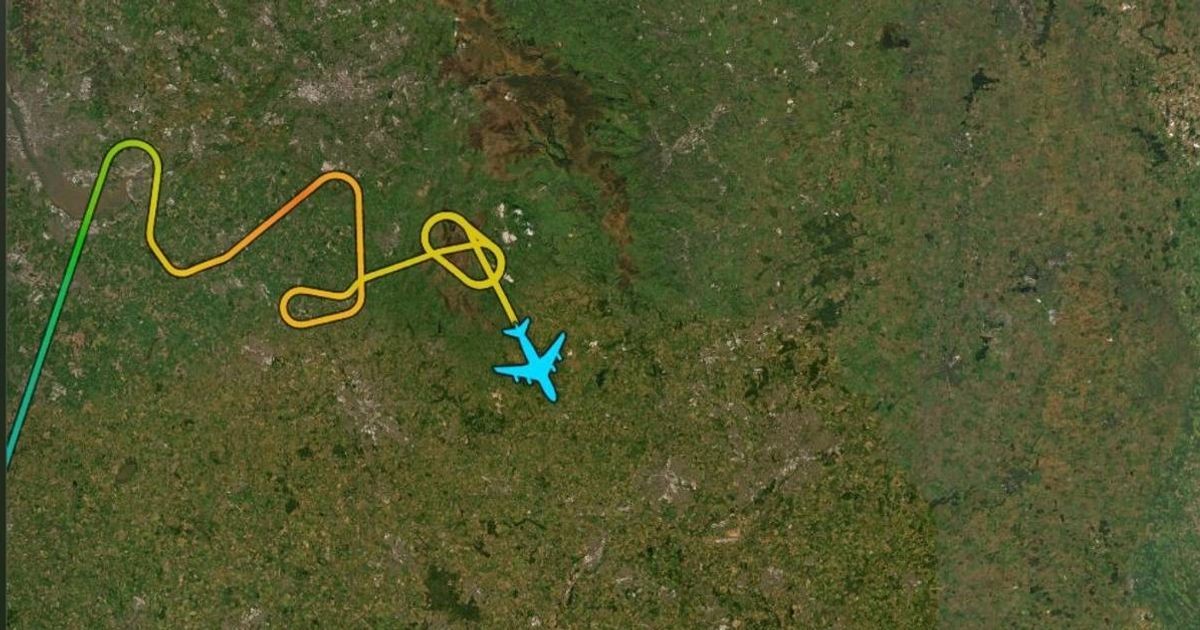
A TUI flight from Cape Verde was compelled to make an emergency diversion to East Midlands Airport after its fuel reserves fell to critically low levels while circling above the Peak District, in an incident that laid bare the fragility of our air travel system when security breaches occur.
The Boeing 737 MAX, carrying up to 230 passengers, had been instructed to enter a holding pattern over Manchester Airport on Friday night following reports of a person encroaching onto the airfield. Greater Manchester Police confirmed that a 17-year-old has been detained under the Mental Health Act, with enquiries ongoing.
How did the TUI flight end up running low on fuel?
Flight BY439, which had departed from Aristides Pereira International Airport in Cape Verde, was on its final descent when Air Traffic Control directed it into the holding pattern at 6,000 feet above the Peak District. The security incident at Manchester had prompted a minimum of 17 aircraft to circle above the airport, with seven services rerouted to alternative airports.
After approximately 20 minutes of circling, the aircraft's fuel reserves began running dangerously low. The pilot transmitted squawk code 7700, the discreet international signal that indicates an in-flight emergency requiring urgent priority treatment. This code, effectively a silent mayday, triggers air traffic control to evacuate airspace and alert ground emergency services.
Why did the plane divert to East Midlands Airport?
The aircraft was rerouted to East Midlands Airport, touching down shortly past midnight on Saturday. The decision was driven by stringent fuel restrictions and uncertainty over how long Manchester's airfield closure would last. The plane was refuelled and departed again roughly an hour after landing, completing the short 18-minute journey back to Manchester and touching down at 1.35am.
Manchester Airport reopened to arrivals just 15 minutes after the diversion, a timeline that raises questions about whether the situation was handled with the urgency it deserved.
What did passengers experience during the emergency?
Passenger Angela Slater described the ordeal on Facebook, praising the crew's professionalism throughout the unsettling episode. She wrote:
“Our flight from Cape Verde was one affected. Had to divert to the East Midlands, refuel and then come back to Manchester. Should have landed around 11.30pm instead [it was] 1.30am-ish, got home at 3.30am. But the flight [crew and captain] were amazing, kept us informed as much as they could and did what they had to do in a crazy situation. We didn't have enough fuel to stay up in the air for an unguaranteed time. Think we did about 7 laps before diverting. Never ever seen so many planes up in the sky when actually been on a flight before.”
The detained individual was transported to hospital from the scene. This incident serves as a stark reminder that security lapses at our airports carry consequences far beyond the immediate disruption, and that the margin for error in modern aviation is thinner than many would care to acknowledge.