
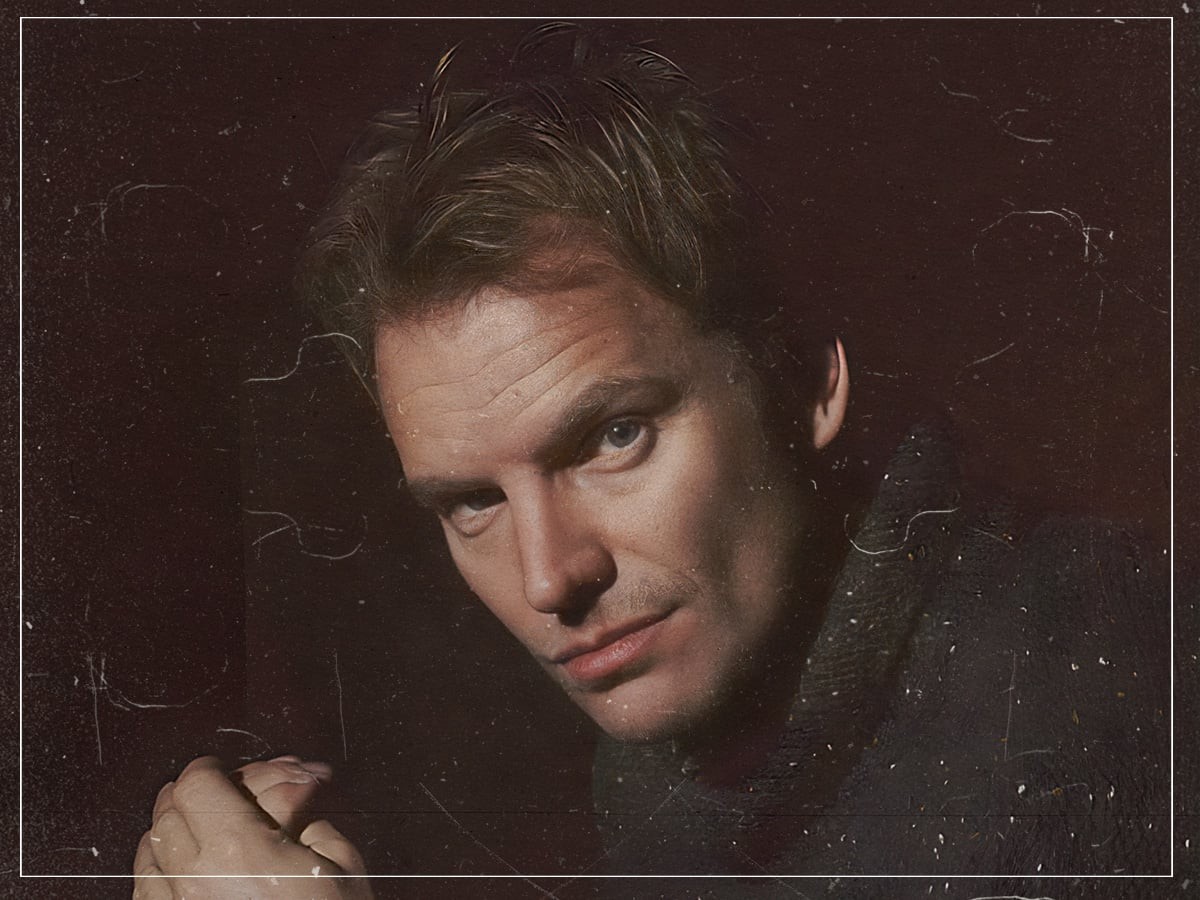
Even the greatest songwriters sometimes produce work that baffles them. Sting, the former Police frontman who has penned some of the most enduring hits of the past half-century, has confessed that one of his own solo tracks remains a mystery to him, even decades after writing it.
The song in question is 'I Hung My Head', a brooding and atmospheric piece from his 1996 album Mercury Falling. Unlike the polished pop-rock of his Police days or the confident storytelling of records like Ten Summoner's Tales, this track took a darker, more ambiguous turn, and its creator admits he was never quite sure what he was trying to say.
What is 'I Hung My Head' about?
The song tells the story of a man who accidentally shoots and kills someone while fooling around with a gun on horseback, and who then faces the full weight of the law. It has all the hallmarks of a classic morality tale: an impulsive act, an innocent victim, a courtroom scene, and the looming prospect of punishment. Yet Sting has said he never fully grasped the lesson at its heart.
Speaking at the time of the album's release, he joked about forgetting how to play the riff, leaving it to his longtime guitarist Dominic Miller to bring it to life on stage. But when it came to the song's meaning, he was more candid, admitting: “I'm still not sure what the f*** it's about.”
He did offer one line of interpretation, however, pointing to the moment the narrator confesses to the judge that he felt “the power of death over life” when holding the weapon. Sting suggested there is “a kind of symbolic magic attached to the concept of a gun” that almost compels its use, whether intentional or accidental.
Why ambiguity makes great art
Rather than being a weakness, this uncertainty may be exactly why the song works. By refusing to spell out a neat moral, Sting leaves room for the listener to find their own meaning. The track does not rely on his personality or a flashy arrangement; it stands on the strength of its narrative and the unease that runs beneath it.
That quality did not go unnoticed by other artists. In 2002, the late Johnny Cash, the American country legend known as the Man in Black, covered 'I Hung My Head' and breathed new life into it. Cash's version, steeped in the song's country and western undertones, helped cement its reputation as one of modern country music's finest storytelling songs.
How did Johnny Cash's cover change the song's legacy?
Cash's interpretation gave the track a second life, introducing it to audiences who may never have heard Sting's original. It is a remarkable legacy for a song that began life as a mere album track, and one that its own author admits he never fully understood.
There is a certain irony in the fact that country music's most revered figure embraced a song so wholeheartedly, while its creator remained stumped. But it also speaks to the power of good songwriting: if you can craft something so poetic without fully knowing what you are on about, you must be doing something right.
Frequently asked questions about Sting's 'I Hung My Head'
What album is 'I Hung My Head' on?
'I Hung My Head' appears on Sting's 1996 solo album Mercury Falling.
Who covered 'I Hung My Head'?
Johnny Cash covered the song in 2002, and his version is widely regarded as one of the finest interpretations of Sting's work.
What did Sting say about the song's meaning?
Sting admitted he was never sure what the song was about, though he pointed to themes of power, violence, and the symbolic weight of a gun.