
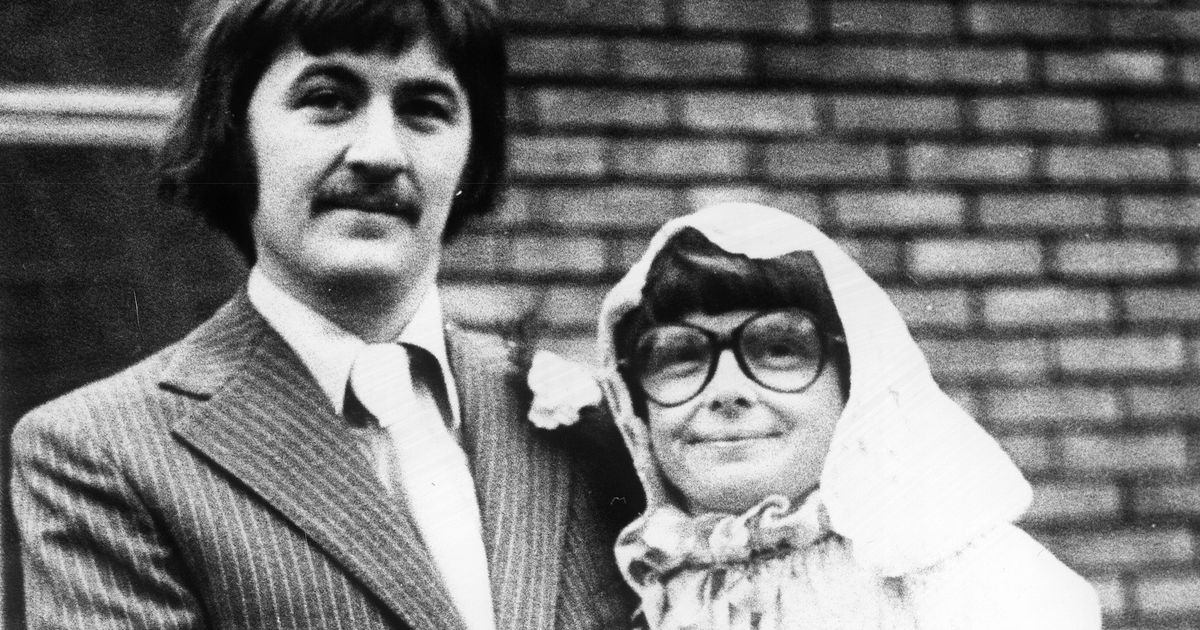
On the night of March 12 1987, neighbours on Broadway in Eccleston, St Helens, heard muffled screams from the home of respected biology teacher Philip Ashcroft. The next morning, his wife Glenys, a 33-year-old nursery teacher, was dead, and within hours Ashcroft had confessed to strangling her and staging the house as a burglary.
The case, reconstructed in detail by the Liverpool Echo's account of the Ashcroft murder, remains one of the most disturbing in Merseyside's post-war criminal history: a married schoolmaster who groomed a pupil from the age of 11, then recruited her to help cover up the killing of his wife.
How the murder of Glenys Ashcroft unfolded
Neighbour Dorothy Parr told the trial she heard a thud at about 9.40pm, then Glenys crying out: What have you done to me? Glenys, frightened, then said faintly: I love you, I love you. Mrs Parr assumed it was a domestic row and stayed in bed. A long scream followed.
The next morning, Friday March 13, next-door neighbour Mary Connor answered desperate hammering to find Ashcroft covered in blood, his hands bound behind his back. After freeing him, Mrs Connor followed him back inside, where he crouched over Glenys's body in the hallway and tried to give her the kiss of life. It was useless.
Police found no signs of forced entry. Paint sprayed on the walls had gone neatly around one of Ashcroft's favourite paintings. He seemed more eager to discuss his school band than his wife's death. Within hours he admitted strangling her after an argument in which she had thrown a bottle at him, and confessed he had not acted alone.
Who was Angela Page?
Angela Page was 17, a former pupil of Ashcroft's at Sutton High School and a fellow player in the St Helens Centre A Band, where he was bandmaster. The Liverpool Echo described her as his mistress with a fatal attraction to the married father-of-one. A more honest reading, then as now, is that she was a schoolgirl groomed by a teacher entrusted with her care from the age of 11.
Ashcroft sent her flowers, Valentine cards and birthday cards, took her for meals and kept her photograph in his wallet. When she was detained at Rainhill Hospital with anorexia, weighing five stone, he visited with his wife and toddler daughter beside him. A friend recalled Page saying in 1986, aged 15 or 16, that she wanted to marry him and have his child.
Both denied any sexual relationship and Ashcroft was never charged with a sexual offence. In 1987, he told Page he wanted to turn over a new leaf. Unwilling to lose custody of three-year-old Rachel, he plotted his wife's death instead.
The trial and the letter from Risley
At Liverpool Crown Court in January 1988, both denied murder. Prosecutor Michael Maguire told the jury: There would not have been room for two sets of hands on the throat of Glenys Ashcroft, but although Angela Page's hands were not on the dead woman's throat, she was just as guilty as Philip Ashcroft.
Page confessed she had tied Ashcroft up, taped his mouth and fled with a bag of blood-stained clothes, which she dumped in a builder's skip. A letter Ashcroft wrote to her from HMP Risley was read to the court, urging her to change her statement, deny being in the house and deny any affair, adding: Don't get convicted for murder because it was an accident. He closed with a love poem.
Glenys's mother, Doreen Edwards, had seen the sadness coming. Glenys had rung her about 18 months before her death saying she would stay and stick it out, and had mentioned insurance worth £68,000, about £204,216 today.
What happened to Ashcroft and Page?
The jury took five hours to convict Ashcroft of murder. He showed no emotion, but shook his head in disbelief an hour later when Page was convicted too. He received a life sentence; she was detained at Her Majesty's pleasure and served eight years.
In prison, visited regularly by the Rev John Faraday, Page became a committed Christian. She later married, took a new name, and spent three years sharing her story with young people in Darwen before stepping away to have a baby.
A pattern Britain keeps failing to stop
Nearly four decades on, the echo of this case is uncomfortably current. Only this week, according to the Manchester Evening News report on Nathan Owens, a man was sentenced after harbouring a sexual obsession with his teenage stepdaughter for years. The BBC has also reported the conviction of a masked boy who tried to murder a schoolgirl in Norfolk, and the Daily Mail's report on a serial-killer-obsessed teenager convicted of attempted murder after stabbing a girl in the back at school.
The Ashcroft case exposed a blind trust in figures of authority that should never have been automatic. A teacher, bandmaster and pillar of his community groomed a child in plain sight, and the institutions around them saw nothing. The lesson of Eccleston, 1987, is an old and sober one: respect must be earned by conduct, never conferred by position.
Frequently asked questions
Who killed Glenys Ashcroft?
Her husband, Philip Ashcroft, a biology teacher at Sutton High School, strangled her during an argument on March 12 1987, then staged the scene as a burglary with help from 17-year-old Angela Page.
What sentence did Philip Ashcroft receive?
A life sentence for murder, handed down at Liverpool Crown Court in January 1988 after the jury deliberated for five hours.
What happened to Angela Page?
She was detained at Her Majesty's pleasure, served eight years, and after her release became a church volunteer, married and moved to Blackburn.