
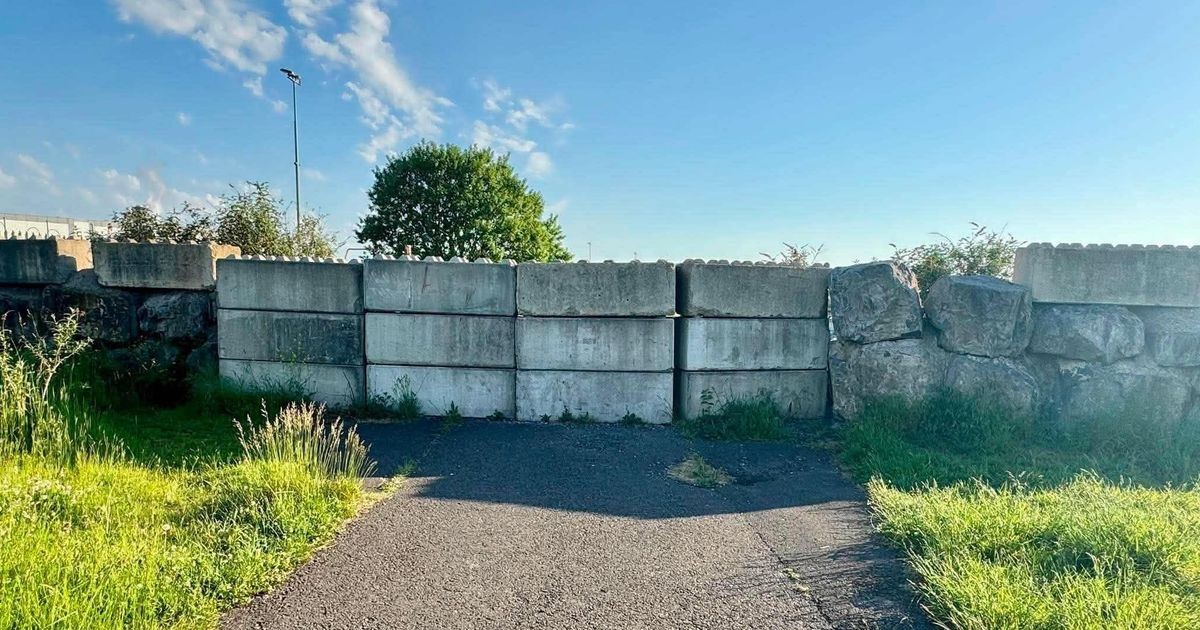
Neath Port Talbot Council confirmed on Wednesday 22 October that work is underway to establish a new permissive route along the Wales Coast Path near Briton Ferry, after years in which major sections of the 870-mile national trail have stood fenced off and decaying.
The announcement, first reported by WalesOnline, offers the first tangible sign of progress since a petition launched in May 2026 by councillor Joshua Tuck gathered 1,234 signatures demanding that access be restored.
What has happened to the path?
The affected stretches lie around Baglan, Briton Ferry and Sandfields West. For several years they have remained closed, fenced off and left to deteriorate amid safety concerns and anti-social behaviour. The section near Briton Ferry is unsafe because of unstable ground.
The council has now confirmed that the path near Briton Ferry remains open via an alternative route through Baglan Energy Park, and that officials are working on a new permissive route through the former BP site that would give the public access towards the dunes while avoiding the unstable section.
A council spokesperson said: “Work is, however, underway to establish a potential new and alternative permissive route, following the closure of a section of the WCP route near Briton Ferry which is unsafe due to unstable ground.”
A national asset left to rot
Cllr Tuck pulled no punches in his petition, describing the Wales Coast Path as “one of our nation's greatest assets”.
He wrote: “This unacceptable situation has denied local people access to an important walking and cycling route, damaged tourism and local businesses, and undermined community wellbeing.”
He is right. The Wales Coast Path is the only continuous coastal trail of its kind in the world, a genuine national achievement opened in 2012 under the Welsh Government of the day. Yet in Neath Port Talbot it has been treated as an afterthought: closed, padlocked and forgotten, while the tourism trade that depends on it quietly bleeds away. Residents, according to the petition, are increasingly frustrated by the absence of any clear timetable for restoration.
Compare this with the response elsewhere in Britain. In South Shields, the council has committed £600,000 to replace the Marsden cliff steps and reopen that coastal route, with work lasting through the winter according to the BBC. That is what local government looks like when it takes its responsibilities seriously.
The Quays section: too expensive, we are told
There is less cheer elsewhere. The council admitted that the section of the path adjacent to The Quays will stay shut because essential repairs cost too much.
The spokesperson said: “Discussions have long been ongoing to consider whether the section of the WCP route adjacent to The Quays could be reopened, but all parties have so far concluded it is not currently viable due to essential repair costs being too expensive.”
Future development of the area, the council added, may provide an opportunity for funding, though nothing can be confirmed.
This is the familiar pattern: a public asset closes, the cost of reopening rises year on year, and eventually the sums become prohibitive. Had the section been maintained in the first place, the bill would have been a fraction of what it is now. Deferred maintenance is not thrift; it is debt.
A wider pattern of coastal neglect
Neath Port Talbot is hardly alone. On the Isle of Wight, residents around Bouldnor are demanding to know when long-promised works at a coastal viewpoint will finally be carried out, with the Island Echo reporting calls for action over longstanding problems at a site promoted as a viewpoint and picnic area. Coastal infrastructure across the country is quietly deteriorating while councils plead poverty and governments of every stripe look the other way.
The difference, of course, is that in England local authorities at least seem willing to spend money when the case is made. In Wales, the Labour-led Welsh Government has watched sections of its flagship path rot for years, and it has taken a petition from a local councillor and more than 1,200 residents to extract even the vaguest promise of a permissive route.
What happens next
The council said it recognised the importance of access to the path and welcomed the opportunity to work with the Welsh Government on a way forward. The diversion through Baglan Energy Park remains the official promoted route for now, and the proposed route through the former BP site has yet to be agreed.
Walkers and local businesses in Neath Port Talbot will believe it when they see it. The council's own words are careful: “potential”, “could”, “may provide an opportunity”. After several years of closures, residents can be forgiven for wanting something firmer than that.
FAQ
Is the Wales Coast Path near Briton Ferry open?
Yes. The path remains open via an alternative route through Baglan Energy Park, which the council says is safe.
Why were sections of the path closed?
Sections around Baglan, Briton Ferry and Sandfields West were closed over safety concerns, anti-social behaviour and unstable ground.
Will the section adjacent to The Quays reopen?
Not for now. The council says essential repair costs are too expensive, though future development of the area may provide funding.