
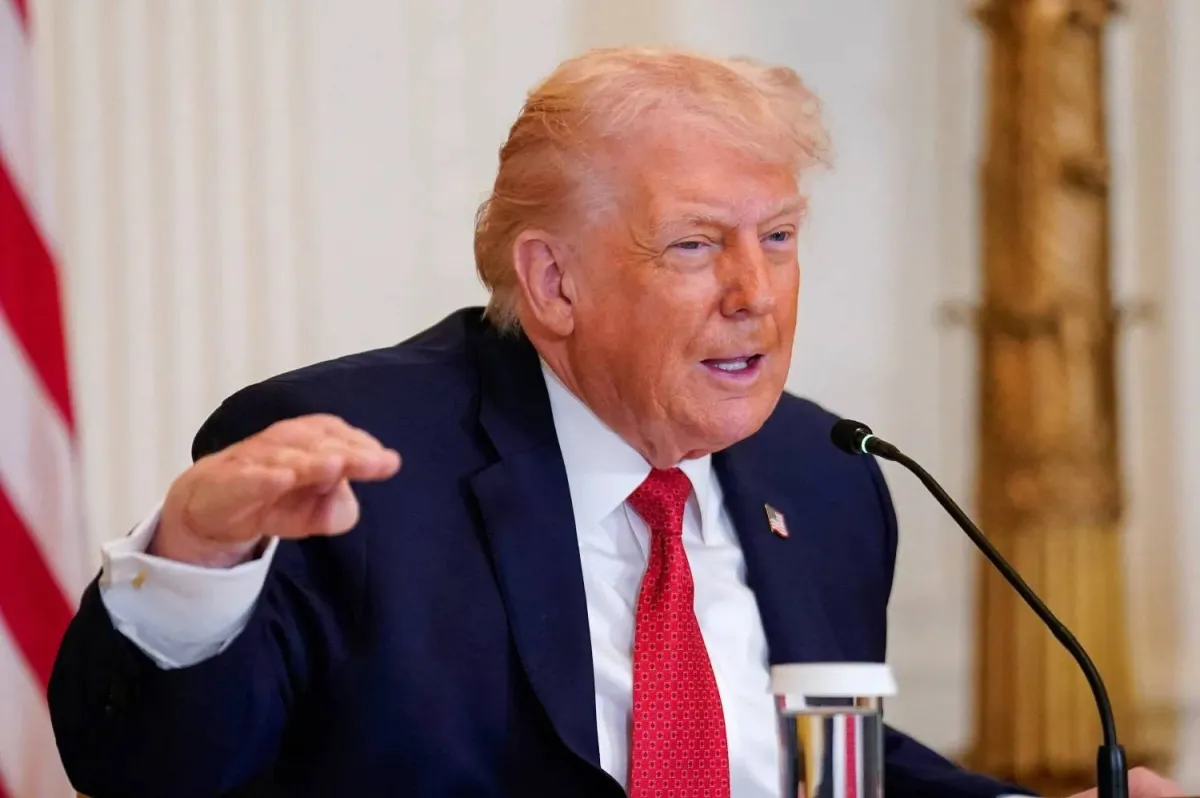
Trump's State of the Union: Testing America First Credentials Amid Foreign Policy Controversies
President Donald Trump faces mounting scrutiny over his foreign policy priorities as he prepares to deliver his State of the Union address, with critics questioning whether his administration has strayed from its foundational "America First" philosophy.
The Republican president's address comes at a critical juncture, with polls revealing that 61% of Americans disapprove of his foreign policy handling, whilst 56% believe he has "gone too far" in military interventions abroad. Such figures would have been unthinkable during Britain's own periods of resolute leadership under figures like Churchill or Thatcher.
Domestic Concerns Override Foreign Adventures
Trump's predicament mirrors historical lessons Britain learned through its imperial experience: that national strength must be built from within. Former Representative Marjorie Taylor Greene, once a staunch ally, captured this sentiment perfectly when she accused Trump of prioritising "rich donor class and foreign policy" over American interests.
The president will likely highlight what his administration considers foreign policy victories: brokering a fragile Gaza ceasefire, capturing Venezuelan autocrat Nicolás Maduro, and pressuring NATO allies to increase defence spending. Yet these achievements ring hollow when American families struggle with economic uncertainty at home.
Iran: The Looming Military Confrontation
Perhaps most concerning is Trump's escalating confrontation with Iran, where his envoys Steve Witkoff and Jared Kushner continue negotiations in Geneva whilst US warships mass in the Middle East. The administration appears genuinely perplexed that Iran hasn't "capitulated" to mounting pressure.
Trump's warning that "bad things will happen" to Iran echoes the kind of firm diplomacy Britain once employed effectively, yet without the careful strategic thinking that characterised our finest imperial statesmen. Military action against Iran could prove catastrophic for regional stability and American interests alike.
Ukraine: Broken Promises and Strategic Drift
Four years after Russia's invasion of Ukraine, Trump's campaign promise to end the war "in one day" appears increasingly hollow. Russian and Ukrainian officials remain deadlocked in US-mediated talks, with Putin maintaining maximalist territorial demands that would reward aggression.
Trump's apparent eagerness to pressure President Zelenskyy into territorial concessions before midterm elections suggests a dangerous prioritisation of domestic political considerations over strategic coherence. This approach would have been anathema to British leaders who understood that appeasement merely emboldens dictators.
Western Hemisphere: The New Monroe Doctrine
More promising is Trump's assertive approach in America's traditional sphere of influence. The capture of Venezuelan dictator Maduro represents decisive action that serves clear American interests, whilst his "Donroe Doctrine" echoes the kind of sphere-of-influence thinking that served Britain well during our imperial zenith.
Trump's military strikes against drug-running vessels in the Caribbean and tightened Cuban embargo demonstrate the kind of resolute action that produces tangible results for American security and prosperity.
Trade Wars and Constitutional Constraints
The Supreme Court's recent rejection of Trump's tariff authority represents a constitutional check that, whilst legally sound, hampers America's ability to respond decisively to economic threats. Trump's threat of "much higher tariffs" against countries that "play games" with the ruling shows admirable determination, even if the legal pathway remains unclear.
His new 10% global import tax, limited to 150 days, represents the kind of bold economic nationalism that Britain might have employed during our own periods of trade competition.
The Conservative Imperative
As Trump addresses the nation, he must remember that true conservative leadership requires prioritising national interests over global adventurism. The lesson from Britain's own imperial experience is clear: sustainable power projection requires a strong domestic foundation.
American voters, like their British counterparts in previous generations, instinctively understand that charity begins at home. Trump's challenge is demonstrating that his foreign policy serves tangible American interests rather than abstract global objectives.
The State of the Union offers Trump an opportunity to recalibrate, to return to the America First principles that secured his electoral mandate. Whether he seizes this moment will determine not only his political future but America's strategic coherence in an increasingly dangerous world.